
From Foundational to Loyalty: The Blueprint for Brand Strategy Success
- Gabriela Mastroianni
- Apr 23, 2025
- 4 min read
Updated: May 30, 2025
Imagine your brand as a building. Not just any building—but a thoughtfully designed structure, where each floor supports the next, guiding your audience from curiosity at the ground level to lasting loyalty at the top.

When brands skip steps or rely on flashy design without substance, the structure wobbles. But with the right foundations, you create more than a brand—you build a space people want to return to again and again.
In today's saturated marketplace, a brand is more than just a logo or a catchy tagline. It's a complex structure built upon multiple layers that collectively shape consumer perception and loyalty.
To construct a brand that not only stands out but also endures, businesses must understand and implement a strategic framework encompassing five critical levels: Foundational, Emotional, Functional, Relational, and Experiential.

1. Foundational: Establishing Core Identity
The foundation of any brand lies in its core identity—its mission, vision, and values. This level defines what the brand stands for and sets the tone for all subsequent interactions.
Research from Columbia Business School emphasises the importance of a strong foundational identity in guiding brand strategy and ensuring consistency across all touch-points.
Key Components:
Mission Statement: Clearly articulates the brand's purpose.
Vision Statement: Outlines long-term aspirations.
Core Values: Establishes guiding principles for behaviour and decision-making.
A well-defined foundation ensures that all brand activities align with its overarching goals and resonate with its target audience.

2. Emotional: Connecting on a Deeper Level
Beyond functional benefits, successful brands forge emotional connections with their consumers. Emotional branding taps into feelings, aspirations, and values, creating a bond that transcends transactional relationships.
Strategies for Emotional Engagement:
Storytelling: Craft narratives that resonate with the audience's experiences and aspirations.
Authenticity: Maintain genuine interactions to build trust.
Empathy: Show understanding and concern for customer needs and challenges.
Studies have shown that emotional connections can significantly influence consumer loyalty and advocacy.

3. Functional: Delivering Tangible Value
At its core, a brand must fulfil its promises by delivering quality products or services. The functional level addresses the practical aspects that meet consumer needs and expectations.
Essential Elements:
Product Quality: Ensure offerings meet or exceed standards.
Reliability: Maintain consistency in performance and delivery.
Customer Service: Provide responsive and helpful support.
Functional excellence forms the basis of customer satisfaction and sets the stage for deeper brand relationships.

4. Relational: Building Trust and Loyalty
Once functional needs are met, brands can focus on cultivating relationships. Relational branding involves ongoing engagement that fosters trust, loyalty, and a sense of community.
Approaches to Strengthen Relationships:
Personalisation: Tailor experiences to individual preferences.
Engagement: Encourage two-way communication through social media and other channels.
Loyalty Programs: Reward repeat customers to reinforce commitment.
Strong relational ties can lead to increased customer retention and positive word-of-mouth referrals.
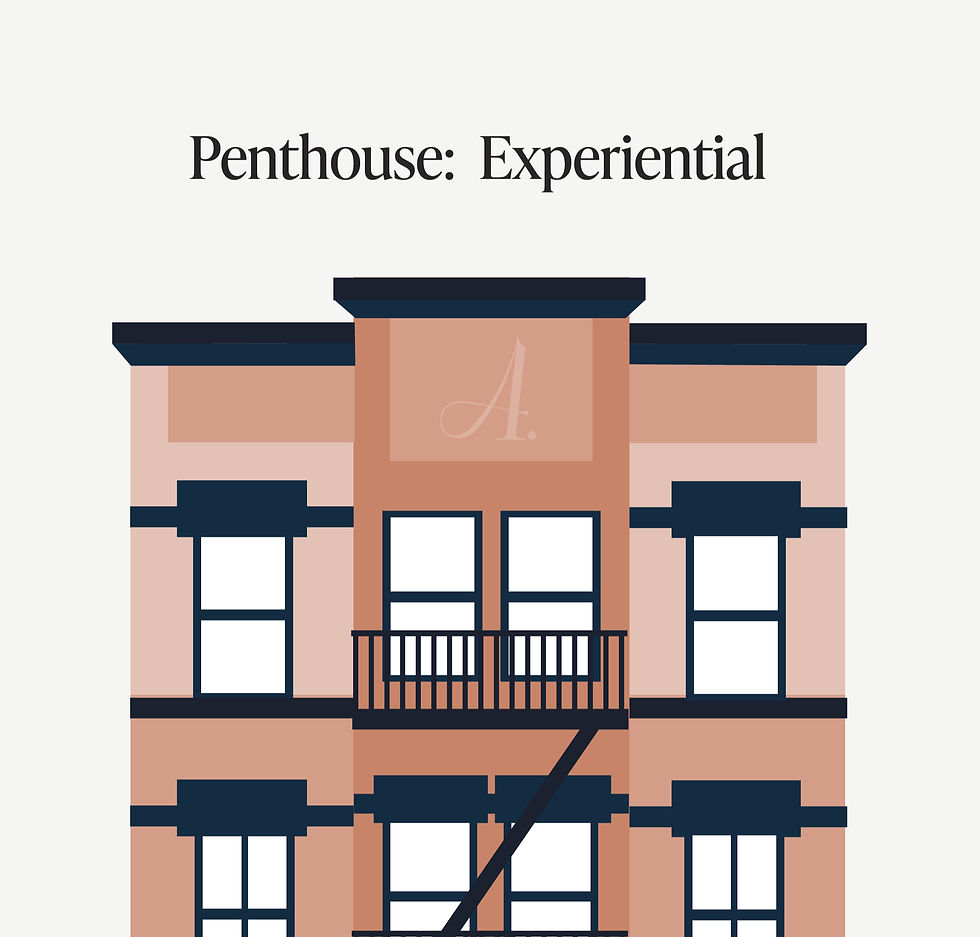
5. Experiential: Creating Memorable Interactions
The experiential level encompasses all the sensory and emotional experiences associated with a brand. It's about creating memorable moments that leave lasting impressions.
Key Aspects:
Sensory Engagement: Utilise visuals, sounds, and scents to enhance brand presence.
Customer Journey: Design seamless and enjoyable interactions across all touch-points.
Innovation: Introduce unique experiences that differentiate the brand.
Multiple studies show experiential branding can significantly impact customer perceptions and drive long-term loyalty.
Integrating the Five Levels
Just like a real building, each floor of your brand needs to be structurally sound and intentionally designed. When one level is missing or poorly developed, the entire experience weakens. But when all five work together—strategically aligned and emotionally resonant—you create more than a brand. You build a destination.
The Columbia Business School article “Functional and Experiential Routes to Persuasion” underscores the importance of layering both rational (functional) and emotional (experiential) strategies to drive long-term brand equity. But what truly makes a brand future-proof is integrating each level into a unified whole—starting with belief and ending with experience.
Implementation Tips:
Consistency: Maintain uniform messaging and experiences across all platforms.
Feedback: Regularly solicit and act on customer input to refine brand strategies.
Alignment: Ensure internal teams understand and embody the brand's values and goals.
So the real question becomes: Are you building a brand with staying power—or just a beautiful facade?

Conclusion
Branding isn’t a surface game. It’s structural. It’s sequential. It’s intentional.
When you approach your brand like a building—layer by layer, level by level—you create more than visibility. You create gravity. Customers don't just notice you—they trust you, advocate for you, and come back for more.
Building a resilient and resonant brand requires more than surface-level efforts. By systematically developing each level—Foundational, Emotional, Functional, Relational, and Experiential—businesses can create a brand that not only attracts customers but also fosters lasting loyalty and advocacy.
And like any architect knows—you don’t skip floors if you want it to last.
Is your brand strategy structurally sound?
If you're not sure, it might be time to renovate—or rebuild.
🔍 Book a brand audit or strategy session with our branding team here
References:
Jedidi, K., & Schmitt, B. H. (2012). Functional and Experiential Routes to Persuasion: An Analysis of Advertising in Emerging vs. Developed Markets. Columbia Business School.
Brakus, J. J., Schmitt, B. H., & Zarantonello, L. (2009). Brand Experience: What Is It? How Is It Measured? Does It Affect Loyalty? Journal of Marketing.
Fernandes, T., & Moreira, M. (2019). Consumer brand engagement, satisfaction and brand loyalty: a comparative study between functional and emotional brand relationships. Journal of Product & Brand Management.
Schmitt, B. H. (1999). Experiential Marketing. Journal of Marketing Management.
Keller, K. L., & Lehmann, D. R. (2006). Brands and Branding: Research Findings and Future Priorities. Marketing Science, 25(6), 740–759.


Comments